



Since the start of Donald Trump’s second term, a clear but long‑undervalued market theme has emerged. Policy has re‑established itself as a central anchor in asset pricing.
A basket tracking companies aligned with White House policy signals and presidential public statements has delivered a cumulative return of 75 percent, far exceeding the roughly 20 percent gain of the S&P 500 over the same period.
ETO Markets will continue to analyze policy trajectories and cross‑asset linkages to help investors identify emerging pricing anchors and structural opportunities.
1.National Security Assets
These companies share two defining traits: irreplaceability and government support. They may not be state‑owned in form, but their capital expenditure, order flow and strategic positioning are deeply embedded in the White House agenda of supply chain reconstruction and manufacturing reshoring.
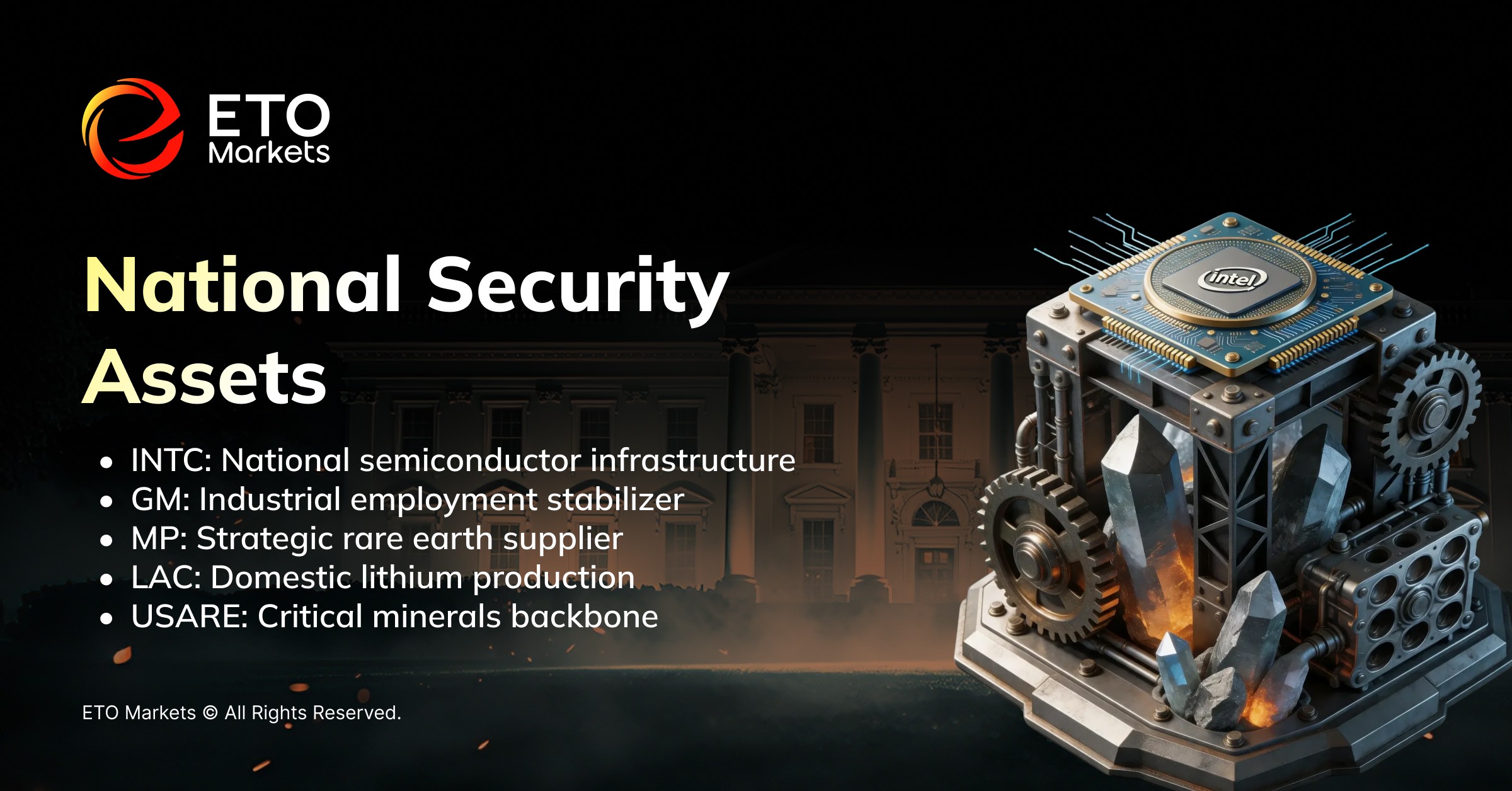
Intel is the clearest example. For the administration, Intel is not merely a chipmaker but the core carrier of America’s advanced process technology and domestic foundry capability. Under themes such as chip autonomy, risk reduction and defense supply chain security, Intel has received substantial subsidies, tax incentives, defense orders and policy preference.
General Motors represents another form of policy linkage. While the surface narrative centers on electric vehicle transition, the deeper policy objective is to preserve US auto industry employment, manufacturing capacity and domestic industrial resilience. Federal loans, tax credits and industrial incentives all map back to reshoring and blue‑collar job stability.
Critical mineral producers illustrate national security attributes even more directly.
MP Materials, Lithium Americas and USA Rare Earth anchor domestic supply of rare earths, lithium and other strategic minerals. With electric vehicles, defense systems, missiles, radar and high‑performance electronics all dependent on these materials, the White House is accelerating domestic mining, refining and stockpiling. These companies benefit from faster approvals, easier financing, federal subsidies and strategic procurement, effectively becoming part of America’s resource security infrastructure.
2.The AI Compute National Team
Nvidia and AMD represent America’s leadership in AI‑era compute power.
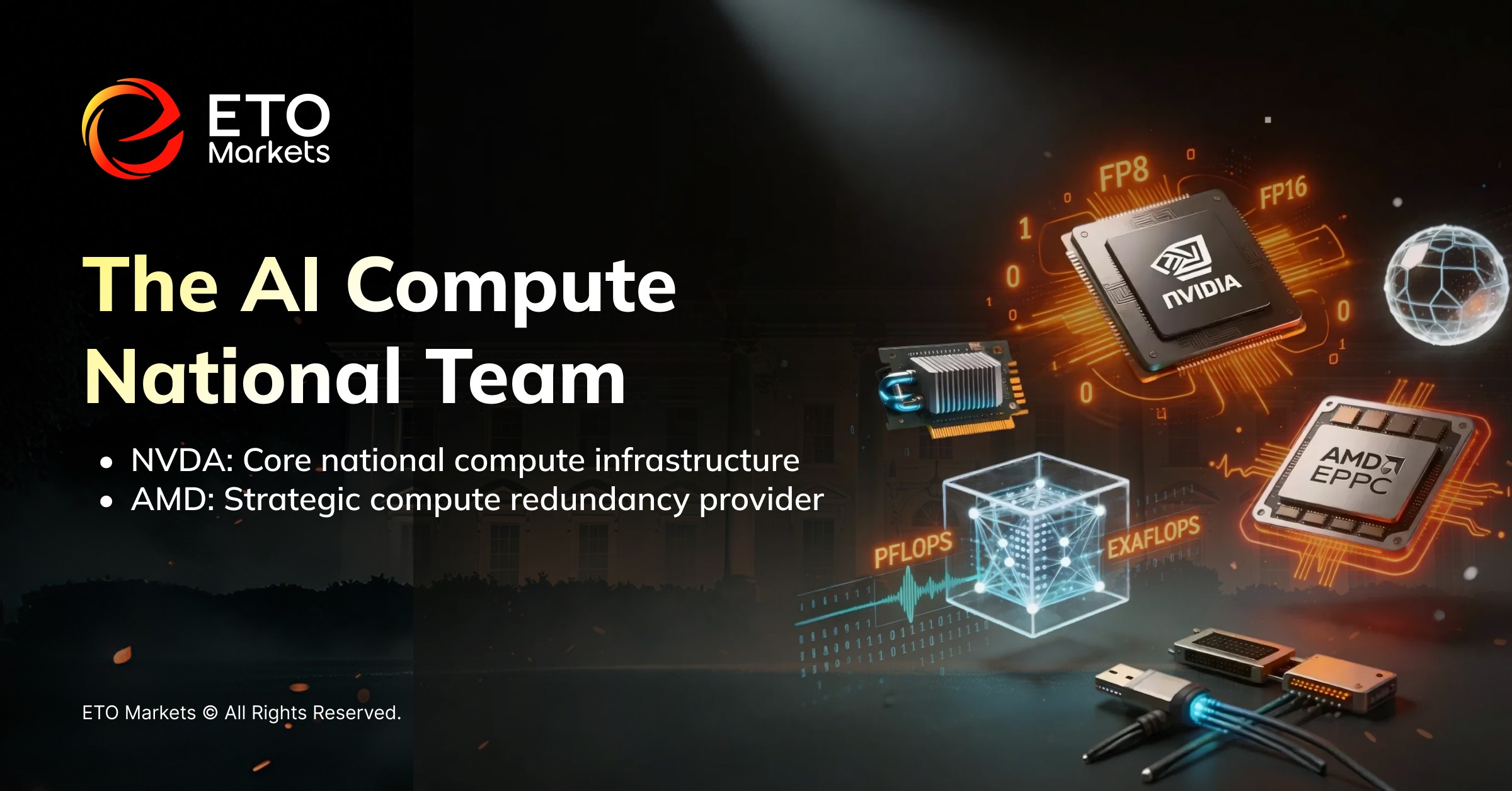
Nvidia’s profile has shifted from a high‑growth tech stock to core infrastructure of the national compute system. As AI becomes a strategic variable in global competition, high‑end GPUs are treated as strategic resources. Export controls and technology restrictions reinforce Nvidia’s dominance in advanced AI chips, while the Department of Defense, national laboratories, federal research agencies and government‑supported supercomputing projects provide sustained demand.
AMD benefits through diversification and strategic redundancy. As the White House pushes for a secure, domestically anchored compute ecosystem, AMD gains from high‑performance computing expansion and from the policy preference to avoid concentration risk in a single supplier. Its role across CPUs, GPUs and accelerators positions it as the second‑tier national compute provider.
3.Political‑Corporate Alliances and the Defense Complex
Tesla is the most prominent example. Beyond electric vehicles, robotics and autonomous driving, its valuation is influenced by the close alignment between Elon Musk and the policy core. Media reports often highlight Musk’s role as a major donor, influential public voice and industrial figure. This relationship can shape regulatory timelines for autonomous driving, AI infrastructure planning and federal policy direction.
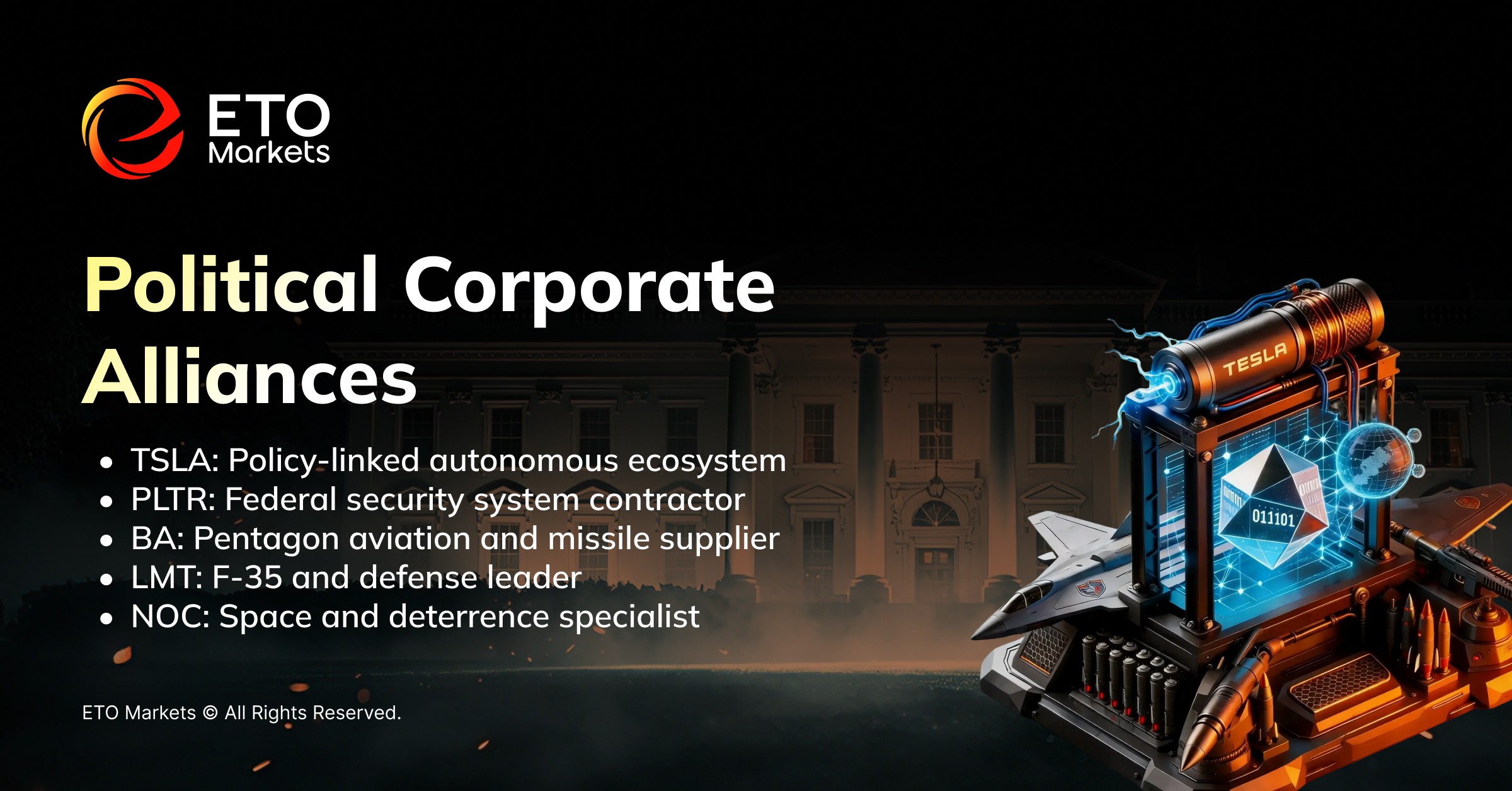
Palantir illustrates direct monetization of policy execution. The company has long been embedded in US defense, intelligence, immigration enforcement and border security systems. Should the administration advance stricter border and security policies, Palantir’s government contracts would likely expand, and its valuation tends to reflect this policy exposure.
Boeing, Lockheed Martin and Northrop Grumman remain central beneficiaries of the traditional defense complex. Boeing’s defense aviation, missile and space businesses depend heavily on Pentagon budgets. Lockheed Martin’s growth is closely tied to programs such as the F‑35 and missile defense. Northrop Grumman plays a critical role in space systems, nuclear deterrence and long‑range strike capabilities. In an environment where missile defense narratives gain prominence, demand visibility strengthens.
4.Emerging Industries Enter a Policy‑Aligned Cycle
While earlier categories benefit from national security and industrial policy, Coinbase and Constellation Energy benefit from shifts in regulatory direction.
Coinbase has long been constrained by regulatory uncertainty. Analysts note that friendlier crypto regulation, reduced enforcement pressure or discussions around strategic digital asset reserves could lift the structural ceiling on its business.
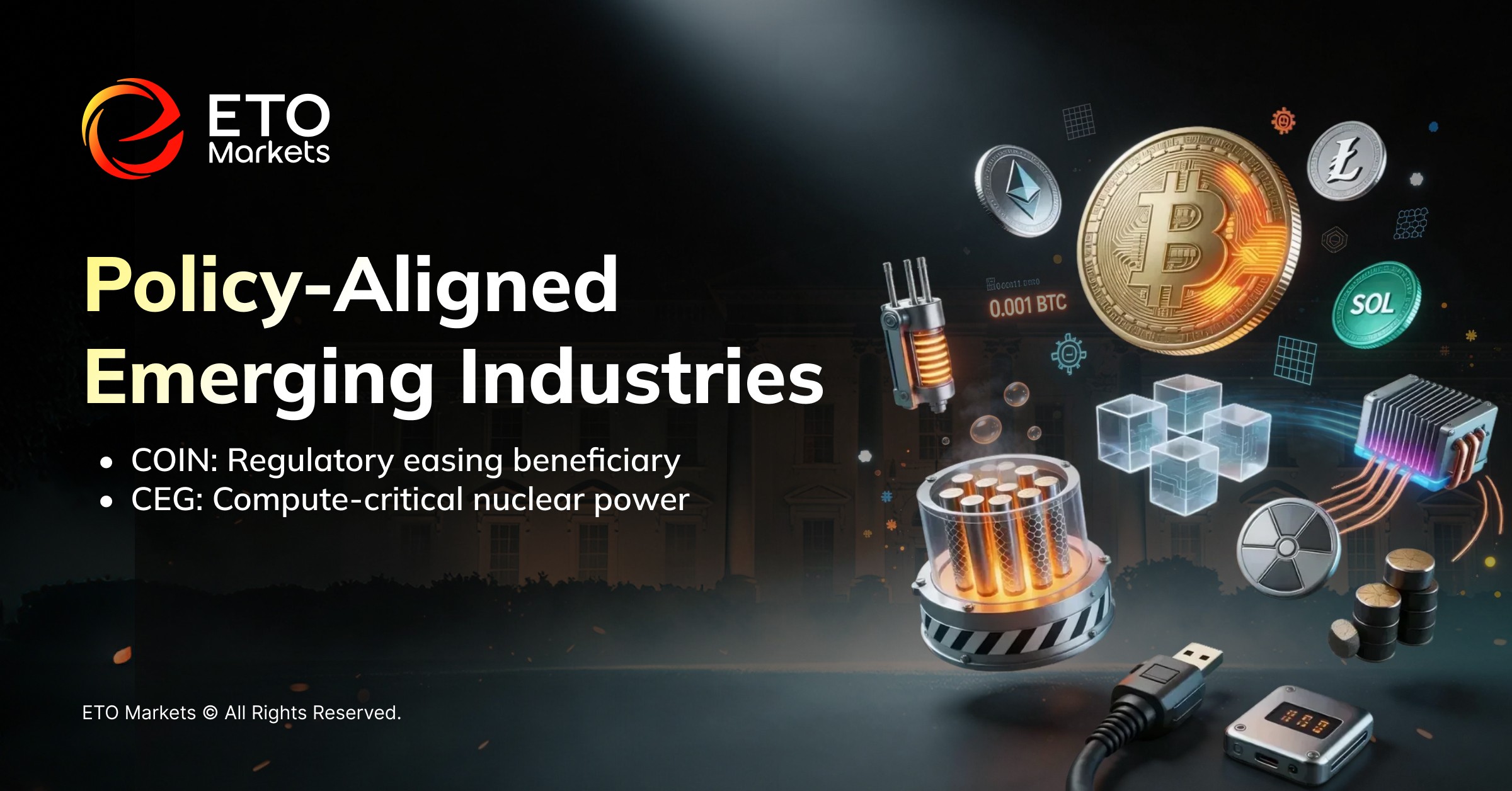
Constellation Energy sits at the intersection of AI‑driven power demand and nuclear policy reassessment. As AI data center electricity consumption surges, the White House is increasingly framing nuclear energy as a matter of energy security and compute reliability rather than environmental debate. As one of America’s largest zero‑carbon nuclear operators, Constellation is being revalued as compute‑critical energy infrastructure.
5.Policy Becomes the New Pricing Center
The rise of White House‑linked stocks is not a short‑term theme but a structural shift. The government is moving from regulator to active participant in the pricing chain.
Energy, compute, defense and regulatory policy are forming new valuation anchors, while traditional frameworks based on cycles, margins and sector sentiment are increasingly supplemented by policy‑driven certainty premiums.
ETO Markets observes that asset performance will depend more on alignment with policy pathways than on single‑variable fundamentals. For investors, the key is not only understanding industry logic but also how budgets, regulation, procurement and policy narratives reshape corporate profit boundaries and valuation ceilings.
Disclaimer
The information contained herein is for general reference only and does not constitute investment advice, a solicitation, or an offer to buy or sell any financial products.
ETO Markets does not guarantee the accuracy, completeness, or timeliness of the information and shall not be liable for any losses incurred from reliance on such content.