
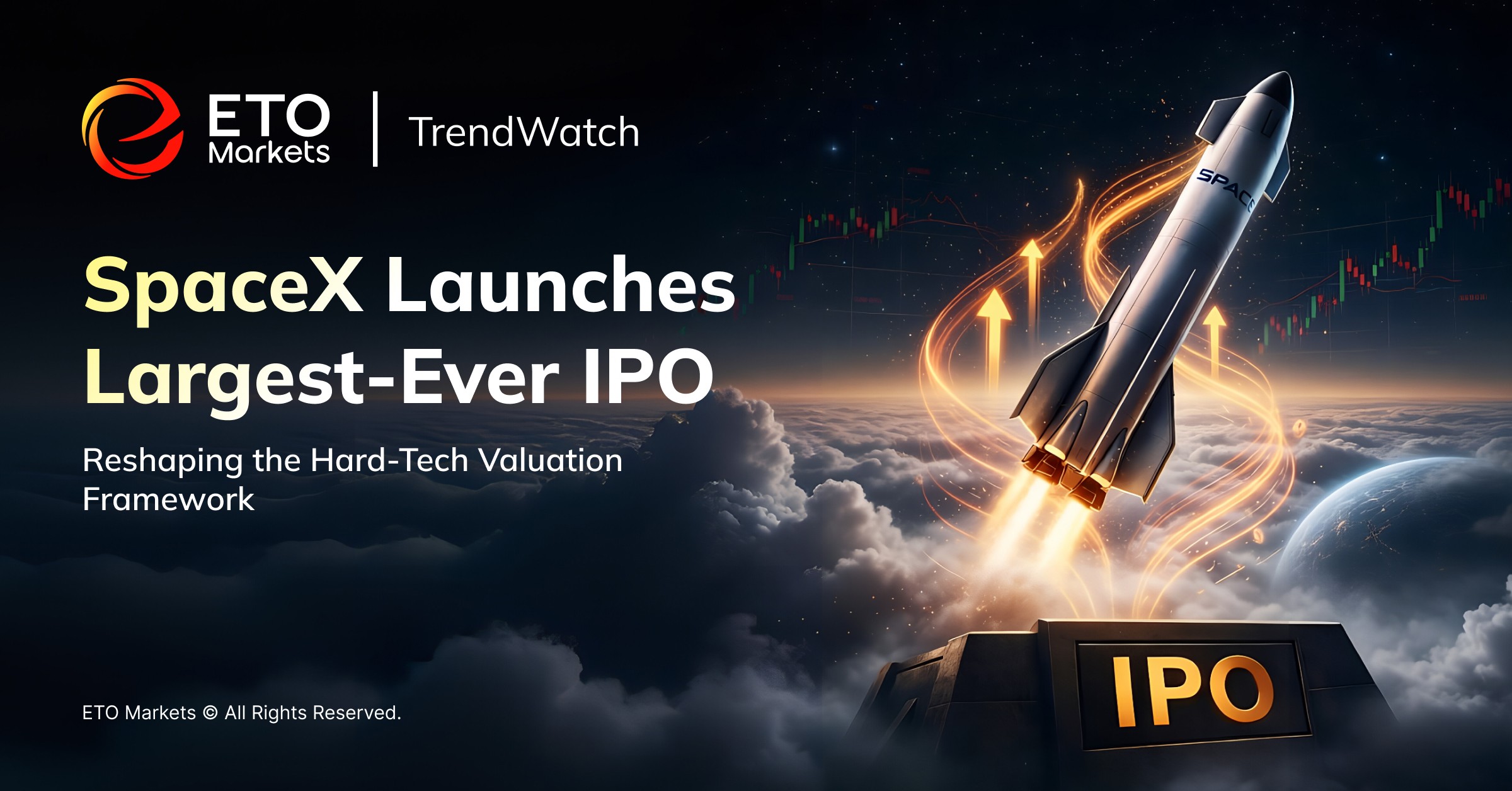
SpaceX has reportedly filed confidential IPO documents with the U.S. Securities and Exchange Commission at the end of March, seeking a valuation exceeding 1.75 trillion dollars and aiming to raise up to 75 billion dollars. SpaceX has already incorporated xAI into its corporate structure, bringing the combined valuation to roughly 1.25 trillion dollars. Together with Starlink and its launch services, the company is projected to generate nearly 20 billion dollars in revenue by 2026.
ETO Markets will continue to monitor global technology capital flows and help investors identify pricing opportunities emerging at the intersection of AI, aerospace, and new infrastructure.
Backed by Major Investment Banks with Retail Participation Expected
The IPO will be supported by a consortium of leading global investment banks, including Bank of America, Goldman Sachs, Morgan Stanley, JPMorgan, and Citigroup, with Barclays, Deutsche Bank, and UBS participating as regional underwriters.
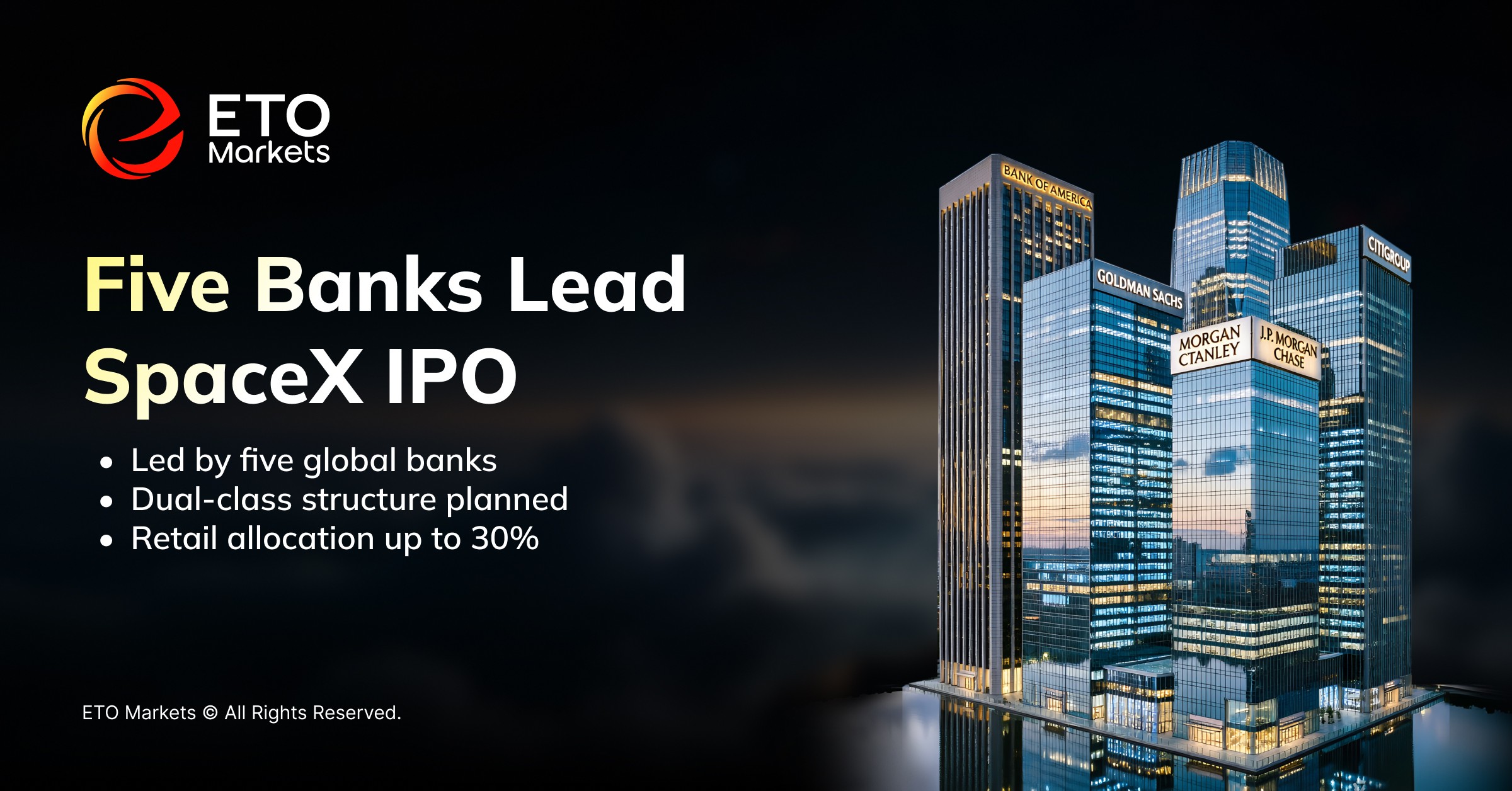
SpaceX is expected to adopt a dual-class share structure to preserve internal control while allocating up to 30 percent of the offering to retail investors. This marks a shift from the traditional institution-dominated allocation model toward a structure that blends broader retail participation with enhanced liquidity stability.
The mechanism aims to balance stable control, a wider market foundation, and resilient liquidity. However, it also introduces structural tensions. The dual‑class structure strengthens founder‑level authority and reduces external oversight, while the high retail allocation may increase the stock’s sensitivity to market sentiment.
The combination of these two features suggests that SpaceX may exhibit significant valuation elasticity and elevated volatility in the early stages of trading. Its valuation framework will likely be shaped simultaneously by fundamentals, capital‑structure dynamics, and governance‑related risks.
Starlink as the Core Pillar, xAI Integration Sparks Debate
Starlink remains the primary driver of SpaceX’s elevated valuation. Its rapidly expanding user base, dominant position in commercial launches, and steady government contract revenue create a rare combination of cash flow strength, growth visibility, and scarcity value.
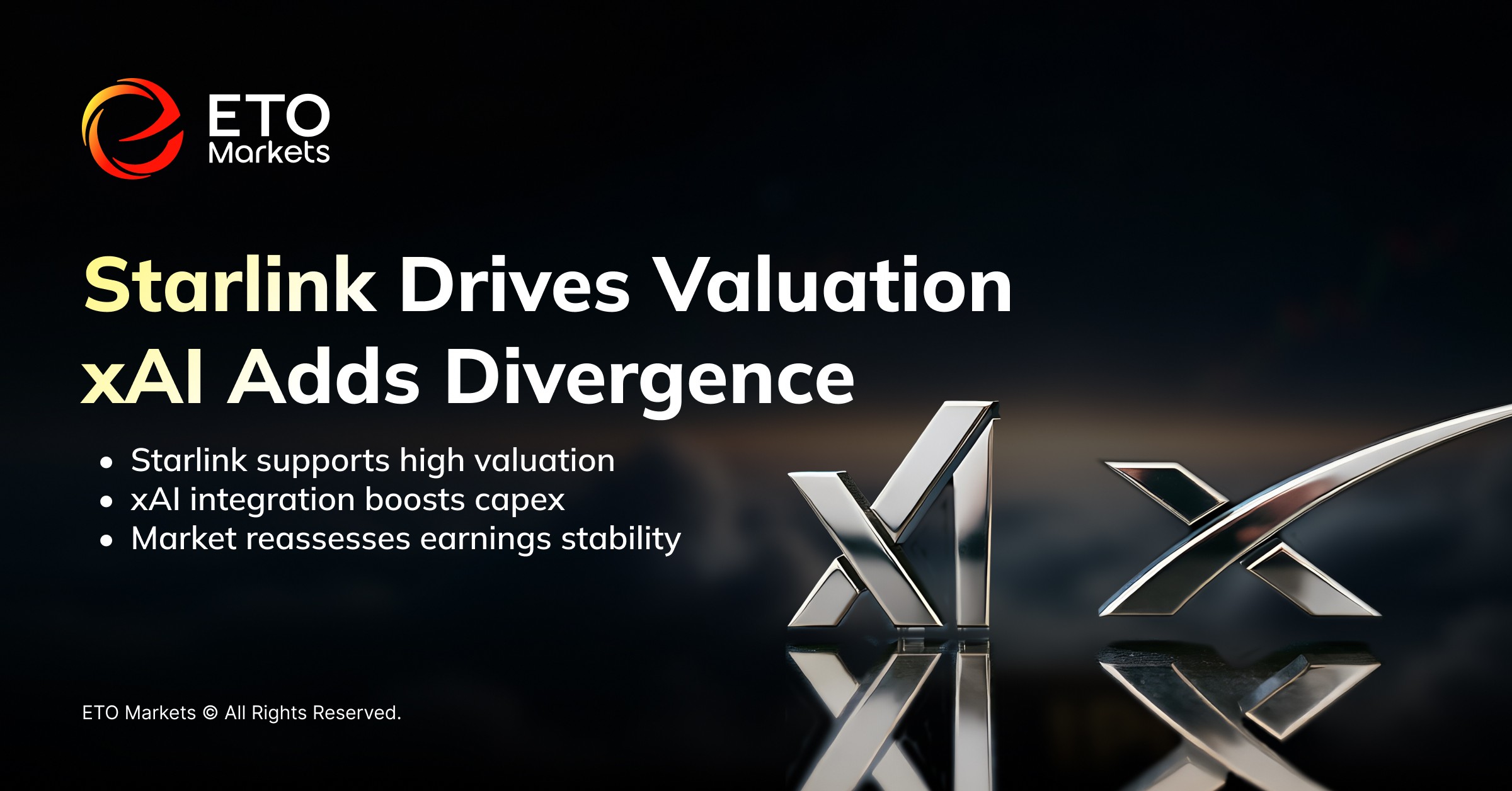
However, the integration of xAI has introduced new valuation uncertainties. xAI’s monthly AI infrastructure spending, estimated at around 1 billion dollars, significantly increases capital intensity. This shifts SpaceX from a predominantly aerospace-and-communications-driven profit model toward one with substantial exposure to the volatile AI sector, prompting investors to reassess the company’s earnings stability.
Concentrated Control with Limited External Oversight
Prior to the xAI merger, Elon Musk’s ownership stake in SpaceX had already fallen below 50 percent, with major external shareholders including Founders Fund, Fidelity, and Alphabet. The updated ownership structure following the transaction has not been disclosed.
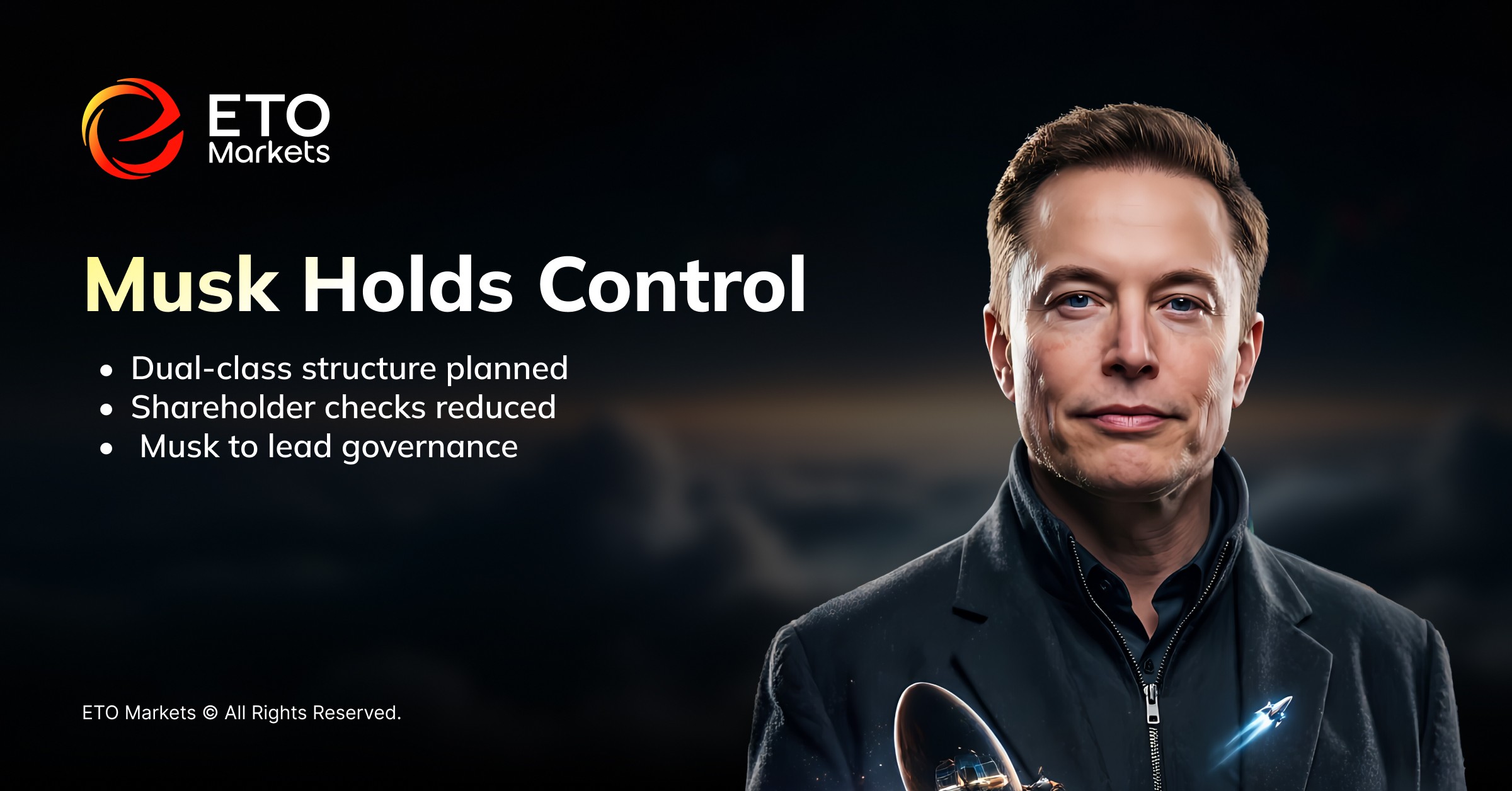
Upon listing, SpaceX is expected to implement a dual-class voting structure, ensuring that insiders retain strategic and governance control post-IPO. While this framework supports decision-making efficiency and long-term strategic alignment, it also reduces the influence and oversight capacity of external shareholders.
Market observers widely believe that this governance model will amplify the impact of Musk’s personal decision-making on both corporate risk and valuation premiums.
AI Capital Cycle Enters a New Expansion Phase
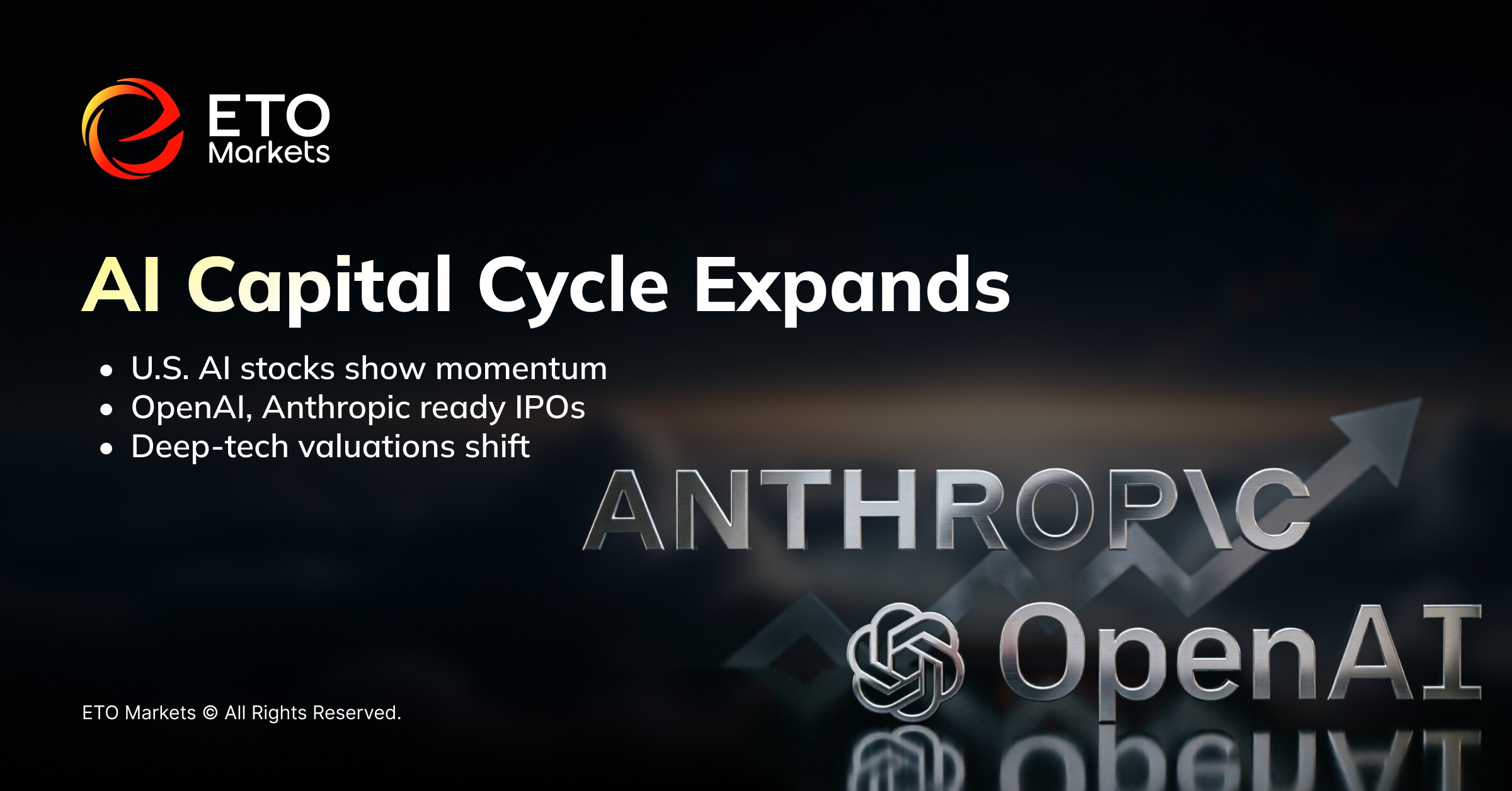
If completed, SpaceX’s IPO would mark a pivotal moment in the capital cycle for AI and deep-tech sectors. OpenAI, Anthropic, and other leading AI companies are also preparing for potential listings, signaling the onset of a new fundraising expansion phase in global technology markets. The space-industry value chain has already reacted strongly to the news. On the day SpaceX’s confidential filing became public, Firefly Aerospace rose 16.01 percent, Intuitive Machines gained 14.68 percent, AST SpaceMobile climbed 10.44 percent, Rocket Lab advanced 10.31 percent, and EchoStar increased 7.43 percent.
Overall, the defining feature of this IPO wave is not the size of the capital raised but the market’s revaluation of the underlying infrastructure of computing power, networks, and AI models. The listing of mega-scale technology companies may reshape valuation boundaries and capital allocation frameworks across the tech sector.
ETO Markets will continue to analyze these developments from a cross-asset and structural perspective, providing investors with clear pricing frameworks and risk-assessment tools amid heightened market volatility.
Disclaimer
The information contained herein is for general reference only and does not constitute investment advice, a solicitation, or an offer to buy or sell any financial products. ETO Markets does not guarantee the accuracy, completeness, or timeliness of the information and shall not be liable for any losses incurred from reliance on such content.